
Vesting Schedule: Meaning, Types & ESOP Guide

What is Vesting?
Vesting means earning ownership of shares over time instead of getting them all at once.
In most startups and ESOP structures, companies grant you shares upfront, but you don’t fully own them immediately. Your ownership increases gradually based on a vesting schedule.
Think of it as a reward system:
Stay longer → Earn more ownership
Leave early → Lose unearned shares
This ensures that equity is tied to commitment and contribution.
What is a Vesting Schedule?
A vesting schedule is a structured timeline that defines when and how your shares become yours.
It clearly answers three important questions:
When do I start receiving shares?
How much do I get over time?
What happens if I leave early?
Companies use vesting schedules to balance fairness and retention. It protects the business while also rewarding employees and founders who stay and contribute over time.
Where is Vesting Used?
Vesting is widely used wherever equity or ownership is involved.
Employee Stock Options (ESOPs)
Employees receive shares as part of compensation
Encourages long-term association with the company
Common in startups and growing companies
Founder Equity
Co-founders don’t get full ownership immediately
Prevents situations where one founder exits early with large equity
Ensures equal commitment
Advisory & Consultant Agreements
Advisors earn equity over time
Ensures ongoing involvement rather than one-time contribution
How Does a Vesting Schedule Work?
A vesting schedule works through a combination of time, conditions, and predefined milestones.
Key Components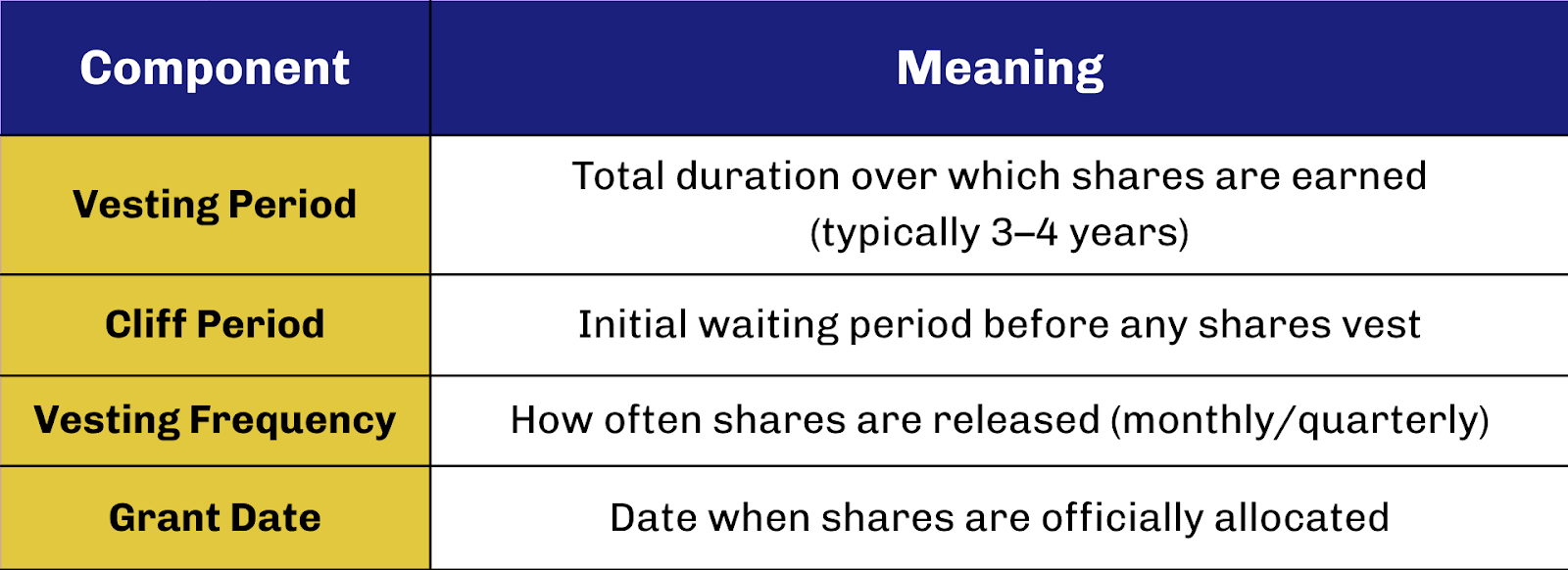
Example of Share Vesting
Let’s say you are granted 1,000 shares with a 4-year vesting schedule and a 1-year cliff period.
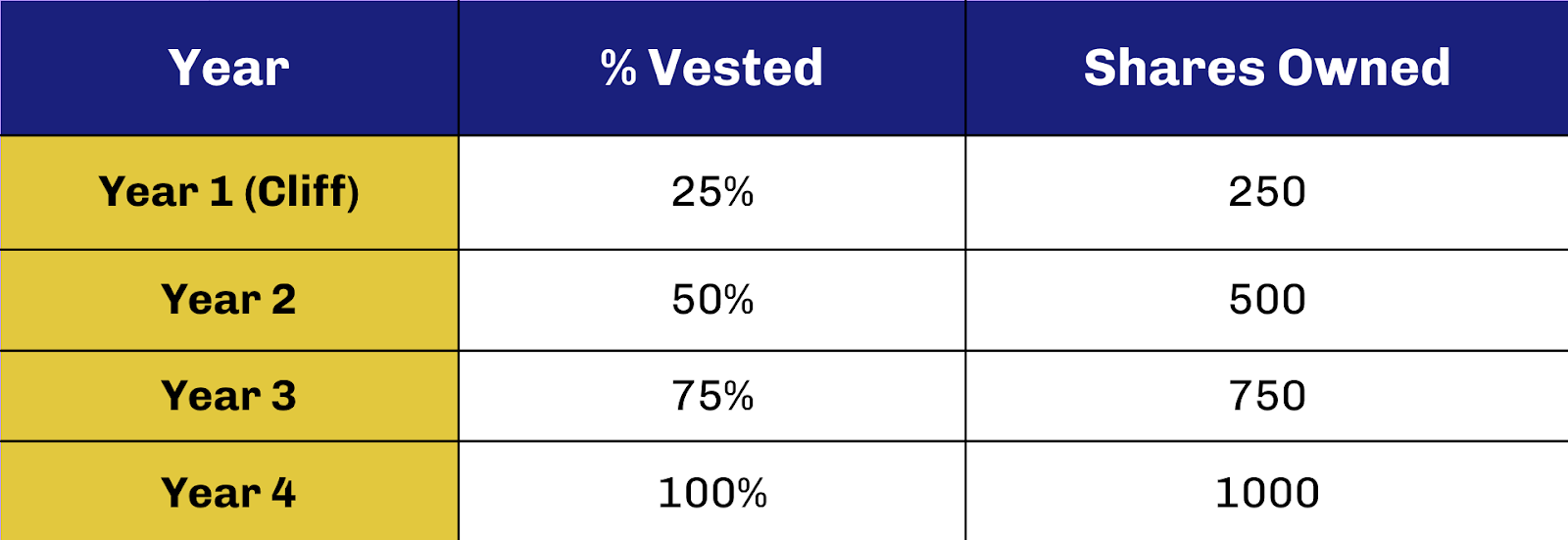
How to read this:
- You receive no shares in the first year until the cliff is completed
- After 1 year, 25% vests at once
- The remaining shares vest gradually over the next 3 years
This structure ensures both commitment and gradual reward.
Types of Vesting Schedules
Companies design vesting based on their goals and roles.
Time-Based Vesting
Shares vest over a fixed duration
Most widely used in ESOPs
Simple and predictable
Milestone-Based Vesting
Shares vest only when specific targets are achieved
Example: hitting revenue goals or launching a product
Common for founders or leadership roles
Hybrid Vesting
Combines time and performance conditions
Part of equity vests over time, rest on milestones
Balances stability and performance
What is a Cliff Period in Vesting?
A cliff period is the minimum duration you must stay before any shares vest.
For example:
A 1-year cliff means you get zero shares if you leave before 12 months
After completing 1 year, a chunk (usually 25%) vests at once
Why companies use cliffs:
To filter out short-term employees
To reduce risk of early exits
To ensure serious commitment before equity kicks in
It’s one of the most important elements to understand before accepting equity.
What Happens If You Leave Early?
Leaving before completing your vesting period directly impacts your ownership.
Here’s what typically happens:
You keep only vested shares
All unvested shares are forfeited
Example:
If your vesting schedule is 4 years and you leave after 2 years:
You retain ~50% of your shares
The remaining 50% goes back to the company
This is why it’s important to evaluate:
Your long-term plans
The vesting structure in your agreement
Tax Implications of Vesting in India
Vesting itself is not taxed, but taxation happens when you exercise and sell shares.
ESOP Taxation Breakdown
What you should know:
Tax at exercise can create cash flow pressure
Holding shares longer may reduce tax liability
Planning the timing of exercise and sale is crucial
Understanding taxation helps avoid surprises later.
Common Mistakes to Avoid
Many people overlook key details in vesting agreements.
Assuming shares are fully yours from day one
Not understanding the impact of the cliff period
Ignoring tax implications until it’s too late
Failing to read ESOP agreements carefully
Not negotiating vesting terms when possible
Even small misunderstandings can lead to significant financial loss.
Practical Tips for Employees & Founders
Being proactive can help you make better equity decisions.
Always ask for a written vesting schedule
Clarify what happens in exit scenarios
Track your vesting progress regularly
Negotiate fair terms, especially in early-stage roles
Seek expert advice before signing complex agreements
A little clarity today can protect your equity tomorrow.
FAQs
1. What is vesting in simple terms?
Vesting means earning ownership of shares over a period of time instead of receiving them all at once. It ensures that you gain equity gradually based on your continued association with the company.
2. What is a vesting schedule?
A vesting schedule is a timeline that defines when and how your shares become fully yours. It includes details like vesting period, cliff, and frequency of share allocation.
3. What is a cliff period in vesting?
A cliff period is the minimum time you must stay with a company before any shares vest. If you leave before this period, you usually don’t receive any shares.
4. What happens if I leave before vesting?
If you leave early, you lose all unvested shares. You only retain the portion that has already vested as per your vesting schedule.
5. What is the typical vesting period in ESOP?
Most ESOPs have a vesting period of 3 to 4 years, often with a 1-year cliff period followed by monthly or quarterly vesting.
6. Is vesting the same as ownership?
No, vesting is the process of earning ownership. You only fully own shares once they are vested, not when they are initially granted.
7. Are vested shares taxable?
Vested shares are not taxed immediately. Tax applies when you exercise the option and again when you sell the shares, depending on gains.
8. Can vesting schedules be negotiated?
Yes, vesting schedules can often be negotiated, especially in startups or senior roles. Terms like cliff period and duration can sometimes be adjusted.
9. What is share vesting?
Share vesting refers to the process through which you gradually earn ownership of company shares over a defined period or upon achieving milestones.
10. What is reverse vesting?
Reverse vesting allows companies to take back shares if certain conditions are not met, commonly used in founder agreements to ensure long-term commitment.
11. Do all startups have vesting schedules?
Most startups use vesting schedules to protect equity and ensure that employees and founders stay committed for a reasonable period.
12. What is monthly vesting?
Monthly vesting means shares are released in small portions every month after the cliff period, rather than in large yearly chunks.
13. Can vesting be performance-based?
Yes, in milestone-based vesting, shares are granted only after achieving specific goals like revenue targets or product launches.
14. What is hybrid vesting?
Hybrid vesting combines time-based and performance-based conditions, where some shares vest over time and others depend on achieving milestones.
15. Why is vesting important for founders?
Vesting ensures fairness among founders and prevents situations where one founder leaves early but still holds a large portion of equity.
Not sure how this applies to you?
Ask our team and we will point you to the right filing or registration.
Talk to our teamWhy choose Us?
Filing Buddy is an entity which is focused at providing legal, financial, and corporate and compliances consultancy services to business entities. Our organisation is a structure made of enthusiastics.

EXPERTISE & RELIABILITY
Trusted industry professionals ensuring compliance, accurate tax filing, and comprehensive services for your business needs.

TAILORED SOLUTIONS
Customized services to meet your specific requirements, including business incorporation, trademarks, patents, and seamless GST return filing.

TIMELY SUPPORT
Dedicated support team committed to providing prompt assistance, resolving queries, and ensuring smooth operations for your business.

COMPETITIVE ADVANTAGE
Gain a competitive edge with our comprehensive suite of services, enabling you to focus on growth while we handle your compliance and taxation needs.













.webp)
.webp)

.webp)

