
LLP Registration in India: Process, Fees, and Document Checklist
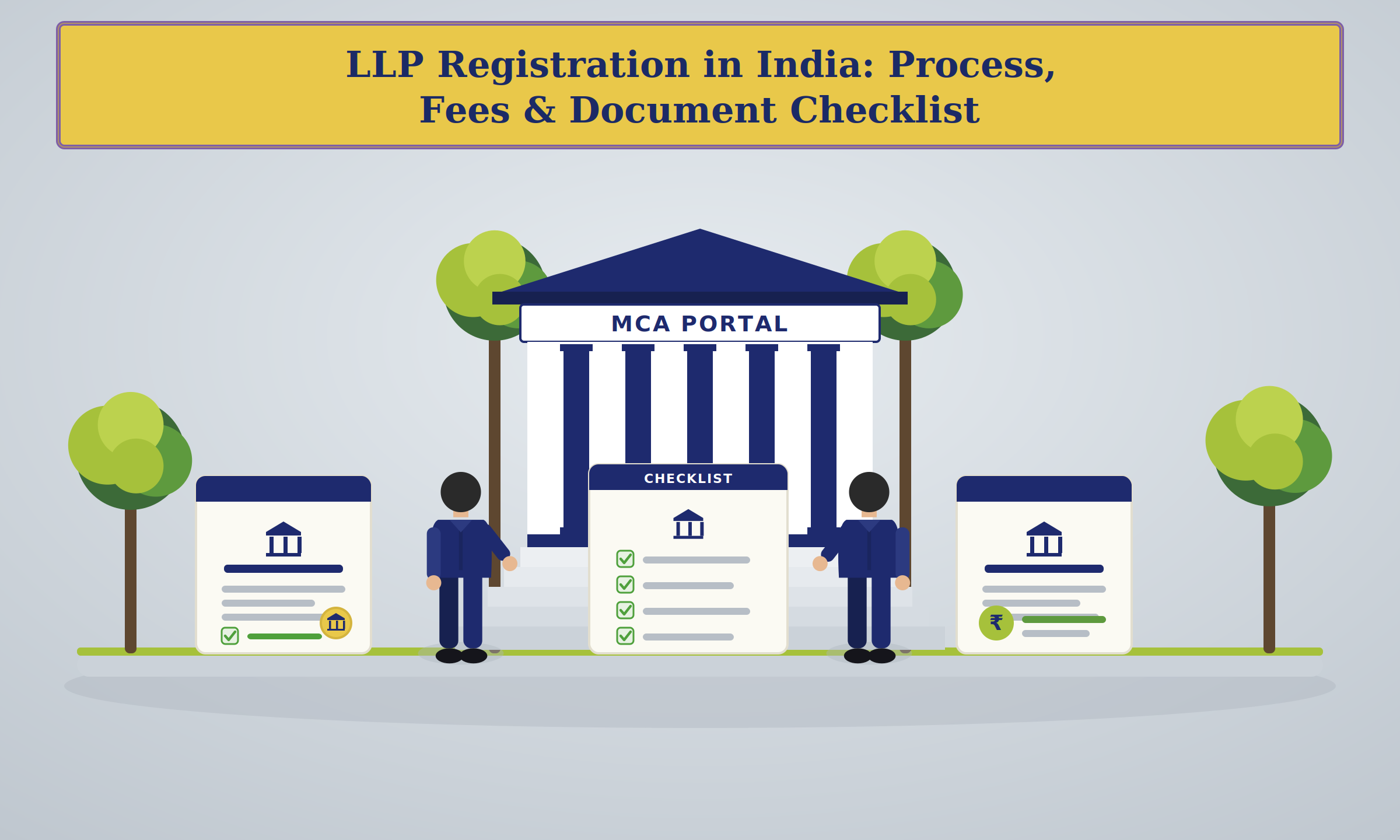
LLP Registration in India: Process, Fees, and Document Checklist
Registering a Limited Liability Partnership (LLP) in India protects your personal assets, requires no minimum capital, and offers a straightforward, low-compliance alternative to a Private Limited Company. The entire online LLP registration process involves obtaining digital signatures, reserving a unique name via RUN-LLP, and filing the FiLLiP incorporation form on the MCA portal.
Let’s talk about the biggest unspoken fear of running a growing business: personal liability.
You are closing bigger deals, signing heavy vendor contracts, and hiring a team to scale your Dhandha. But if you are still operating as a standard, unregistered partnership, you are walking a dangerous financial tightrope. If a client defaults, a project goes south, or the business takes an unexpected hit, your personal savings, your car, and your family home are legally on the hook.
On the flip side, you probably don't want the crushing compliance burden, mandatory day-one audits, and high yearly maintenance costs of a full-fledged Private Limited Company.
That is exactly where the Limited Liability Partnership (LLP) comes in.
It is the ultimate founder's sweet spot. You get the day-to-day operational freedom of a traditional partnership combined with the rock-solid legal shield of a corporate entity. Let's cut the dense legal jargon and break down exactly why this structure is a game-changer, what the llp registration fees actually look like, and the exact checklist you need to get your incorporation certificate safely.
Is an LLP Better Than a Pvt Ltd for Your Startup?
An LLP is generally better than a Private Limited Company for bootstrapped founders and service-based agencies because it carries a much lighter compliance burden, requires no mandatory statutory audit until your turnover crosses ₹40 lakhs, and offers a tax-free profit distribution to partners. It gives you corporate-level protection without corporate-level headaches.
When founders start looking into business registration, they usually get stuck choosing between a Private Limited Company and an LLP.
The truth? The "best" choice depends entirely on how you plan to fund your business. Here is the straightforward breakdown:
The Safety Net
Both structures offer the exact same core benefit: Limited Liability.
If your LLP takes a financial hit, the only money at risk is the capital you explicitly invested into the business. Your personal assets remain completely untouchable.
But here is where the LLP pulls ahead for early-stage founders: it doesn't force you into endless paperwork. A Private Limited Company legally requires you to hold formal board meetings, draft heavy resolutions, and pay for an expensive statutory audit starting from day one even if you haven't made a single rupee in sales.
An LLP lets you bypass all of that. You do not need to hire an auditor until your annual turnover crosses ₹40 lakhs or your capital contribution exceeds ₹25 lakhs.
The Funding Reality Check
If an LLP is so simple, why does anyone register a Private Limited Company? The answer is equity.
When to choose Pvt Ltd: If your immediate goal is to pitch to Venture Capitalists, Angel Investors, or issue ESOPs to early employees, you must register a Private Limited Company. LLPs cannot issue shares, making them incompatible with VC funding models.
When to choose an LLP: If you are a bootstrapped founder, running a service-based agency, consulting firm, or a family business, the LLP is the undisputed champion. You keep total control, slash your yearly compliance bills in half, and enjoy the operational freedom to run your Dhandha your way.
Step-by-Step LLP Registration Process
The official LLP registration process is entirely digital and involves obtaining a Class 3 Digital Signature Certificate (DSC) for partners, reserving a unique business name via the RUN-LLP form, and filing the comprehensive FiLLiP incorporation form on the MCA portal.
If you have all your documents ready, the entire process takes about 10 to 14 days.
Gone are the days when you had to carry physical paper files to a government office to register a business. Today, the entire Ministry of Corporate Affairs (MCA) process has been upgraded to a fully online, web-based system (the MCA V3 portal).
However, the portal still uses heavy legal jargon. Let’s translate the official procedure into a simple, actionable, four-step checklist.
Step 1: Obtain Digital Signatures (DSC)
Since the entire registration process is online, you cannot physically sign the incorporation documents. Instead, every designated partner must purchase a Class 3 Digital Signature Certificate (DSC). This acts as your secure, legally binding electronic signature.
Step 2: Reserve Your Brand Name (RUN-LLP)
Before you file the main paperwork, you must ensure your desired business name is legally available. You will use the Reserve Unique Name (RUN-LLP) web service on the MCA portal.
- Pro Tip: Do not pick a name that sounds too similar to an existing Private Limited Company or a registered trademark, or the MCA will instantly reject it. You can submit up to two name preferences at once.
Step 3: File the Master Incorporation Form (FiLLiP)
Once your name is approved, you will file the Form for Incorporation of Limited Liability Partnership (FiLLiP). This is the master document where your business is officially born.
- You will declare your registered office address, the capital contribution of each partner, and the primary business activity.
- The best part? Submitting the FiLLiP form automatically triggers the generation of your company’s PAN and TAN, saving you an extra step with the Income Tax Department.
Step 4: The LLP Agreement (Form 3)
Receiving your Certificate of Incorporation is not the final step. Within exactly 30 days of your LLP being incorporated, you must draft your official LLP Agreement and file it under Form 3 on the MCA portal.
Think of this agreement as the legal constitution of your business. It dictates profit-sharing ratios, voting rights, and what happens if a partner wants to leave.
- It must be printed on state-specific non-judicial stamp paper, notarized, and signed by all partners.
- Warning: Missing this 30-day deadline triggers a brutal penalty of ₹100 per day with no upper cap.
To see exactly what the MCA V3 portal looks like during the actual filing process, check out this LLP Registration on MCA v3 portal walkthrough. This visual guide walks through attaching the digital signature and filing the FiLLiP form.
The Complete LLP Document Checklist
The primary documents required for LLP registration include PAN cards, Aadhaar cards, and passport-size photographs of the designated partners, along with a recent utility bill and a No Objection Certificate (NOC) from the property owner for the registered office.
Gathering exactly what the Ministry of Corporate Affairs (MCA) demands before you start filing will save you weeks of frustrating government rejections.
The number one reason an LLP application gets rejected isn't because the business idea is bad. It gets rejected because a partner’s name is spelled slightly differently on their Aadhaar card than on their PAN card, or because the rent agreement is outdated.
The MCA is incredibly strict about paperwork. To guarantee a smooth, one-shot approval, you need to pull the right files from your Google Drive. Here is the exact, updated checklist of documents you need to collect.
1. Documents Required from the Partners
Every designated partner must submit their personal KYC documents. If you have a foreign partner, their documents must be notarized and apostilled in their home country.
PAN Card: This is absolutely mandatory for Indian nationals. Ensure your exact name and date of birth match your other ID proofs perfectly.
Identity Proof: A clear copy of your Aadhaar Card, Passport, Voter ID, or Driving License.
Residential Address Proof: Your latest personal bank statement, mobile bill, or electricity bill. Crucial rule: This document cannot be older than two months.
Photograph: A recent, clear passport-size color photograph with a white background.
2. Documents Required for the Registered Office
Your business needs a legal home. Even if you are operating out of a co-working space or your own living room, you must provide proof of the registered address to the government.
Utility Bill: A copy of the latest electricity, gas, water, or landline telephone bill for the premises. Just like your personal address proof, this bill must strictly be less than two months old.
Proof of Ownership or Rent Agreement: If you own the property, submit the sale deed or property tax receipt. If the space is rented or leased, submit the legally binding rent agreement.
The Landlord's NOC (No Objection Certificate): This is the most critical document. You must submit a formal, signed NOC from the landlord (the person whose name is on the utility bill) explicitly stating they have no objection to you using their premises as the registered office of your LLP.
Decoding the Cost: What are the LLP Registration Fees?
While traditional agencies charge anywhere from ₹5,000 to ₹15,000 in total LLP registration fees, Filing Buddy simplifies this with a radically transparent flat professional fee of just ₹1,999 plus actual government fees and GST. Understanding the breakdown between government slabs and professional charges protects you from misleading "₹99 registration" advertisements online.
If you search for "LLP registration online," you will be immediately bombarded with ads promising to register your business for practically nothing.
As a founder, you know that if a price looks too good to be true, it usually is. Those ultra-low "clickbait" prices only quote the base government fee and conveniently hide the rest of the mandatory charges until you are already halfway through the checkout process.
To help you budget accurately without the corporate fluff, let's pull back the curtain on the actual costs of incorporating an LLP in India, and how we do things differently.
The Official MCA Government Fees
The Ministry of Corporate Affairs (MCA) charges a sliding scale fee based entirely on how much capital you are initially injecting into the business. Here is the exact government fee structure for the master FiLLiP incorporation form:
| Capital Contribution Slab | MCA Government Fee (Form FiLLiP) |
| Up to ₹1,00,000 | ₹500 |
| ₹1,00,001 to ₹5,00,000 | ₹2,000 |
| ₹5,00,001 to ₹10,00,000 | ₹4,000 |
| Above ₹10,00,000 | ₹5,000 |
(Note: Reserving your LLP name via the RUN-LLP service costs an additional flat government fee of ₹200.)
The "Hidden" Mandatory Costs
You cannot legally incorporate an LLP by just paying the MCA fee. To get your Certificate of Incorporation safely, you are legally required to clear three additional hurdles:
- Digital Signatures (DSCs): Since physical signatures are no longer accepted, every designated partner needs a Class 3 DSC to electronically sign the portal forms.
- State Stamp Duty: Your LLP Agreement (the legal constitution of your business) must be printed on state-specific non-judicial stamp paper. This cost varies completely depending on your state for example, Maharashtra and Delhi have different slab rates.
- Professional Certification Fees: You technically can fill out the data on the portal yourself, but the incorporation form must be digitally certified by a practicing Chartered Accountant (CA) or Company Secretary (CS) before the government will accept it. Traditional CA firms often charge anywhere from ₹4,000 to ₹10,000 just for the certification and drafting process.
The Filing Buddy Difference: Zero-BS Pricing
We know that early-stage founders need their capital to hire talent, run ads, and build their product not to pay inflated legal fees.
That is exactly why Filing Buddy charges a radically transparent flat professional fee of just ₹1,999 + actual government fees + GST.
There are no hidden clauses, no sudden "document drafting" upcharges, and no last-minute surprises. We handle your digital signatures, the RUN-LLP name reservation, the complex LLP Agreement drafting, and the MCA portal negotiations, giving you an elite compliance partner at a price that actually makes sense for a growing startup.
Frequently Asked Questions
The most common LLP registration questions revolve around specific eligibility rules, mandatory documents, MCA filing costs, and annual tax obligations in India. Understanding these core answers ensures a smooth compliance journey on the MCA portal for any early-stage business.
When you are trying to register your company, you do not have time to dig through 100-page government PDFs to find a single answer. We analyzed the most frequently searched queries by Indian founders and broke them down into rapid, clear, and actionable answers.
1. What are the documents required for LLP registration in India?
The essential documents include PAN cards, ID proofs (Aadhaar/Passport), and recent residential address proofs (bank statement) for all partners, plus a recent utility bill and a No Objection Certificate (NOC) from the landlord for your registered office. Ensure no document, especially utility bills, is older than two months when filing on the MCA portal.
2. What is the cost of LLP registration in India?
While traditional offline agencies can charge anywhere from ₹5,000 to ₹15,000, Filing Buddy offers complete LLP registration at a transparent professional fee of just ₹1,999 plus actual government fees and GST. Your final total will depend directly on your initial capital contribution and the specific stamp duty of your state.
3. Is a CA required for LLP registration?
Yes, while you can fill out the basic forms yourself, the master FiLLiP incorporation form must be digitally certified by a practicing Chartered Accountant (CA), Company Secretary (CS), or Advocate before the MCA will process it. Attempting a 100% DIY route usually leads to expensive rejections due to drafting errors.
4. Do I need GST for an LLP?
GST registration is not automatically mandatory when you incorporate an LLP; you only need to register if your annual turnover crosses ₹40 Lakhs for goods (₹20 Lakhs for services) or if you plan to sell across state lines. However, many B2B startups voluntarily register for GST immediately to claim Input Tax Credits on their early business expenses
5. What is the MCA fee for an LLP?
The official MCA filing fee for an LLP scales based on your capital contribution, starting at just ₹500 for capital up to ₹1 Lakh and capping at ₹5,000 for capital exceeding ₹10 Lakhs. There is also a flat ₹200 fee to reserve your desired business name via the RUN-LLP service.
6. Is LLP profit tax-free in India?
No, an LLP in India is taxed at a flat base rate of 30% on its net taxable business income. Additional surcharges (12% if income exceeds ₹1 crore) and a 4% Health and Education Cess also apply to the total tax amount. However, the actual profit share distributed to the partners after the LLP pays its tax is exempt in the hands of the partners.
7. Can I register an LLP myself?
Technically yes, but practically it is highly unadvised because you must navigate the complex MCA V3 portal, draft a legally binding LLP Agreement, and obtain mandatory CA/CS digital certification. Missing the 30-day window to file your LLP agreement triggers a brutal ₹100-per-day penalty, making professional help a much safer bet.
8. Who is eligible to start an LLP?
Any two individuals (natural persons) can start an LLP, provided at least one of them is a resident of India. Corporate entities or existing companies can also act as partners in an LLP, represented by a nominee.
9. Is an LLP better than a PVT Ltd?
Yes, an LLP is significantly better if you run a bootstrapped startup, agency, or family business because it has far fewer compliance rules, lower yearly costs, and no mandatory statutory audit until your turnover crosses ₹40 lakhs. However, if you plan to raise venture capital or issue employee stock options (ESOPs), you must choose a Private Limited Company.
10. Is an ITR mandatory for an LLP?
Yes, filing an annual Income Tax Return (ITR-5) is 100% mandatory for every registered LLP in India. You must file this return every year by the prescribed deadlines (usually July 31st, or October 31st if a tax audit is required), even if your business had zero revenue, suffered a loss, or conducted absolutely no business activity during the year.
11. What are the 4 types of GST?
The 4 types of GST you will encounter while billing are CGST (Central tax on intra-state sales), SGST (State tax on intra-state sales), IGST (Integrated tax on inter-state sales), and UTGST (Union Territory tax). For most standard local sales, you will split the tax equally between CGST and SGST on your invoices.
12. Is salary from an LLP taxable?
Yes, any salary, bonus, or remuneration paid to a working partner is fully taxable in the hands of that individual partner under the head "Profits and Gains of Business or Profession". The LLP can claim this partner remuneration as a deductible business expense, provided it is explicitly authorized in the LLP Agreement and stays within the legal limits defined by the Income Tax Act.
The Filing Buddy Action Plan
The fastest way to complete your LLP registration is to gather your foundational KYC documents, select your top business name choices, and hand the portal execution over to a certified professional. Streamlining this step ensures you avoid common MCA rejection traps and get your corporate bank account opened without weeks of administrative delays.
At the end of the day, launching a business shouldn't feel like an endless battle against government forms. A single minor typo on a landlord’s NOC, a mismatched middle name across your ID proofs, or a poorly drafted clause in your LLP Agreement can completely stall your registration or delay your corporate bank account opening for weeks.
Your time as a founder is your most scarce and valuable currency. Every hour you spend trying to decipher the MCA V3 portal's error messages is an hour stolen from closing your first clients, refining your product, and building your team.
Incorporation should be a clean, celebratory milestone, not a stressful compliance headache. Here is your quick, zero-friction checklist to lock in your personal liability shield and launch your business safely today.
Your Launch Day Checklist
Gather your core paperwork: Pull clean, clear scans of your PAN card, Aadhaar card, and a recent electricity bill for your intended registered office.
Brainstorm your brand names: Pick two unique names for your business that do not conflict with existing corporate names or registered trademarks.
Hand it over to Filing Buddy: Reach out to our team. For a flat professional fee of just ₹1,999, we put your incorporation on complete autopilot. We will handle the Class 3 Digital Signatures, clear the RUN-LLP name reservation, manage the MCA negotiations, and draft a legally airtight LLP Agreement tailored specifically to your business goals.
Stop letting legal red tape slow down your entrepreneurial momentum. Connect with Filing Buddy today, get your incorporation running smoothly in the background, and focus 100% of your energy on growing your Dhandha.
Contact Us
An expert will call you within 24 hours. No payment required to get started.
6.png) How to Claim a TDS Refund: Step-by-Step Guide
5 minutes read
How to Claim a TDS Refund: Step-by-Step Guide
5 minutes read
6.png) DIR-3 KYC Compliance: A Director's Guide to Avoiding Disqualification
5 minutes read
DIR-3 KYC Compliance: A Director's Guide to Avoiding Disqualification
5 minutes read
2.png) ITR Filing Last Date September 2026: The Founder's Guide to Tax Audits & Belated Returns
5 minutes read
ITR Filing Last Date September 2026: The Founder's Guide to Tax Audits & Belated Returns
5 minutes read
4.png) Register For ESI & PF Now Or Face Employer Penalties On Every Payroll!
5 minutes read
Register For ESI & PF Now Or Face Employer Penalties On Every Payroll!
5 minutes read
Have a question about this?
Our team can walk you through what applies to your business and what to do next.
Talk to our teamRelated posts
How to Obtain a Company Registration Number in India
Understanding Corporate Identification Numbers (CINs) and How to Obtain Them in India
. 2 mins.png)
Difference between Udyog Adhaar and Udyam Certificate
Want to get registered for Udyog Aadhar and Udyam Certificate? Here is their registration processes. Also, know about their differences. Explore their features, benefits, and processes to register online for each, helping you to choose the right option as per your need.
. 3 min read.png)
Changing Your Bank Signatory? Here are the Y Documents Required by Most Banks in India
Learn how bank signatory is important for financial workflow. Know why bank signatories are important and discover the documents required to change signature of your signatory.
. 5 min readEverything right at your mail.
Request a Call Back
Leave your details and Divya from Filing Buddy will call you from +91 788 008 1056.
Prefer to call now? 📞 +91 788 008 1056
Chat with us on WhatsApp
Hi there! 👋 Connect with our team on WhatsApp.
Hello FilingBuddy, I would like to know more about your services.
Chat Now