
FSSAI Registration Online: Get Your License Fast | Filing Buddy
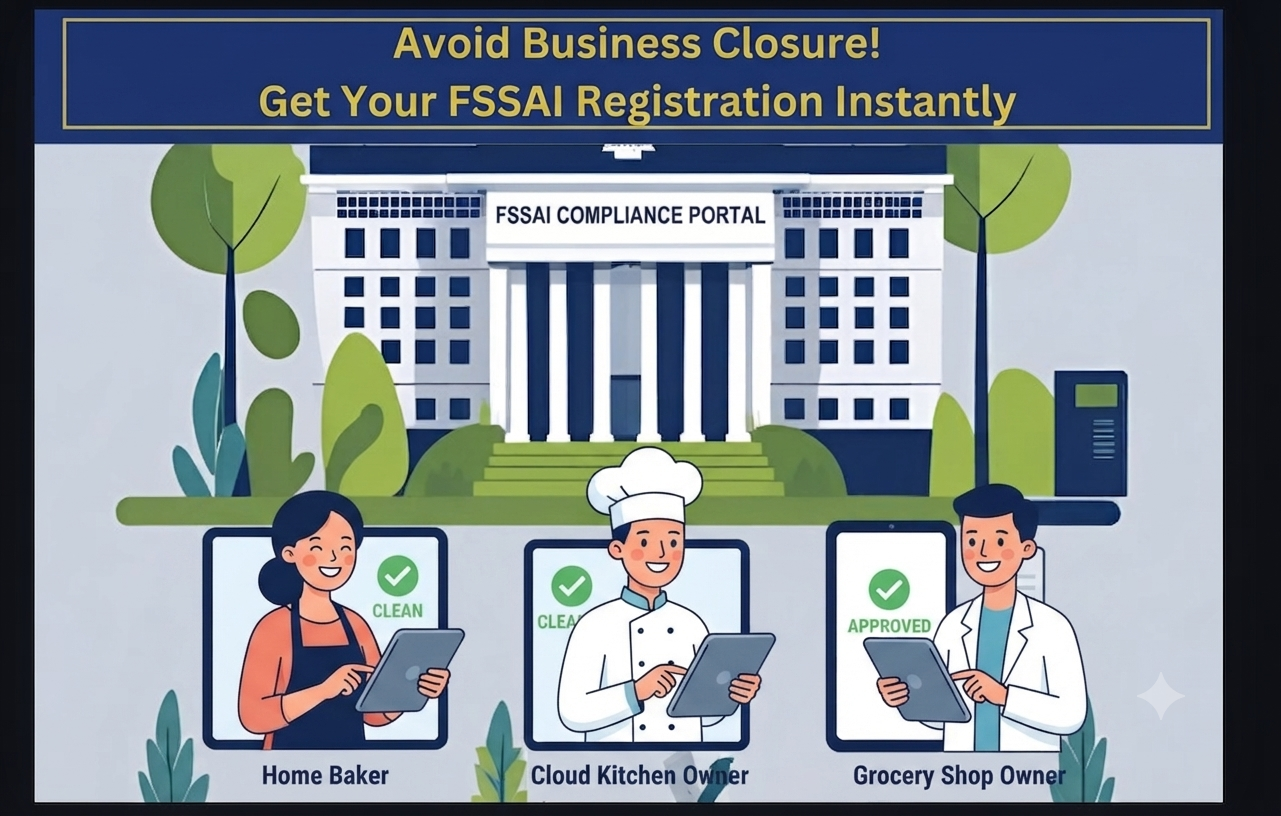
FSSAI Registration Online: The Ultimate Compliance Guide for Every Food Business
An FSSAI registration (or license) is the mandatory legal permit required to handle, process, or sell food in India. It confirms your business meets national hygiene and safety standards, acting as the ultimate shield against sudden legal shutdowns and business closure.
Whether you are running a bustling cloud kitchen, a local café, or a home-based catering service, you’ve poured your heart and soul into your recipes. But operating without a license is like driving without a seatbelt—you might be doing fine today, but one surprise inspection from the authorities can bring your entire operation to a grinding halt. Compliance isn't just "government paperwork"; it is the foundation of your reputation and the primary proof of trust for your customers. Let’s break down exactly how to secure your business, keep it legal, and focus on what you do best: growing your Dhandha.
What is FSSAI Registration and Why Do You Need It?
An FSSAI license is the official "stamp of approval" from the Food Safety and Standards Authority of India. Without it, you are operating illegally, which leaves your business vulnerable to heavy fines and immediate forced closure.
Think of your FSSAI certificate as your business's legal lifeline. In India, any individual or entity involved in manufacturing, processing, packaging, storing, distributing, or selling food must hold this registration.
- Building Customer Trust: Consumers and investors view the FSSAI logo as a sign that your food is safe and hygienic.
- Access to Platforms: If you plan to sell through delivery apps like Swiggy or Zomato, a valid FSSAI license is mandatory for listing your business.
- Legal Protection: Having the license formally verifies that you follow safety standards, which protects you from unexpected health inspections.
If you are ready to make your business official, you can explore professional assistance for FSSAI license registration here.
Difference between Basic, State, or Central License
The type of FSSAI license you need is determined by your annual turnover, the scale of your operations, and the geographic reach of your business. Choosing the correct category early ensures you don't overpay for the wrong license or face rejections for insufficient compliance.
Not every food business requires the same level of oversight. The government classifies businesses into three tiers to ensure that small-scale operators aren't burdened by the same paperwork as massive national corporations.
Here is a quick breakdown to help you identify your category:
| License Category | Who Needs It? | Annual Turnover |
| Basic Registration | Small-scale businesses, home-based food units, and petty food operators. | Below ₹12 Lakh |
| State License | Medium-sized manufacturing units, hotels, and transporters | ₹12 Lakh – ₹20 Crore |
| Central License | Large-scale businesses, exporters, and multi-state operators. | Above ₹20 Crore |
Why the scale matters-
- Basic Registration is ideal for startups and home bakers just starting their journey.
- State License is required once your business grows beyond a small neighborhood footprint and you need to scale your distribution.
- Central License is mandatory for businesses operating across multiple states or those involved in the import/export of food products.
If you are unsure where your business currently fits, you can get clarity on the FSSAI license requirements for your specific food business here.
Rules for Food Business
Most legal notices and rejections occur because of minor documentation errors or a failure to match business activity with the correct license category. Understanding these traps early can save your business from costly, time-consuming compliance hurdles.
Many food business owners treat the FOSCOS portal as a "set-and-forget" task, but even a small oversight can flag your business for scrutiny. Here are the common mistakes you should avoid:
- Ignoring the Renewal Deadline: Your FSSAI registration is not a one-time process; it requires timely renewal before the expiry date to avoid automatic penalties.
- Mixing Personal and Business Details: Using personal contact details or mismatched address proof often leads to a "defective application" notice from the department.
- The "Home-Based" Misconception: Many assume that because they operate from home, they don't need a license. In reality, all food businesses—including home bakers and cloud kitchens—require mandatory FSSAI license registration to operate legally.
- Multiple Location Neglect: If you operate from different physical kitchens or retail outlets, each location generally needs its own separate registration or license.
- Importing Without Central License: If you plan to import food ingredients, you are immediately required to hold a Central License, regardless of your current turnover.
Your Step-by-Step Filing Buddy Checklist
Getting compliant doesn't have to be a headache. To secure your FSSAI license registration, you simply need to have your documentation organized before you begin the application process on the FOSCOS portal.
Follow this simple checklist to keep your filing butter-smooth and avoid unnecessary delays:
- Identity Proof: Keep a clear, scanned copy of the PAN card and Aadhaar card of the proprietor, partners, or directors ready.
- Proof of Premises: Have valid documents that prove you have legal possession of your workspace, such as a rent agreement, electricity bill, or a NOC from the landlord.
- Food Safety Plan: Prepare a basic document outlining how you handle, store, and process food safely to maintain hygiene standards.
- Operational Details: Have a complete list of all food products or categories you intend to manufacture, sell, or distribute.
- The Filing Buddy Sync: Instead of navigating the complex forms on the FOSCOS portal alone, our team can help you cross-check your data to prevent rejections.
You now have the full roadmap to keep your Dhandha compliant and protected. Whether you are launching your first product or scaling your operations, remember that Filing Buddy is here to handle the paperwork so you can stay focused on growth. Click here to start your FSSAI registration with us today.
Maintain & Scale Your Business.
Maintaining your FSSAI registration is an ongoing commitment to your customers, not just a one-time task. Staying compliant involves keeping your records updated and ensuring your license is renewed on time, allowing you to grow your business without the fear of sudden legal interruptions.
Think of compliance as the foundation of your scaling strategy. Just as you wouldn't build a house on shaky ground, you shouldn't scale your food business without a rock-solid compliance record. Here is how you can manage the long-term health of your business:
- Set Renewal Reminders: Your license has a specific validity period; marking your renewal date on your calendar 60 days in advance is the smartest way to avoid automatic penalties.
- Keep Financials Clean: Maintaining a clear separation between your personal bank accounts and your business current account makes it significantly easier to provide clean financial statements during an audit.
- Stay Updated with FOSCOS: Rules and food safety standards can evolve; keeping an eye on the official FOSCOS portal ensures you are always aware of new requirements.
- Leverage Professional Support: When your business starts scaling, don't let paperwork hold you back. Filing Buddy acts as your Dhandhe Ka Saathi, helping you automate your compliance so you can focus entirely on your product and your customers.
Compliance doesn't have to be a headache. By building these small, consistent habits into your daily routine, you protect your reputation and show your customers—and your future investors—that you are a disciplined professional who respects safety standards.
Post-Approval Compliance
Getting your license is only the first step. To keep your business running smoothly, you must maintain active compliance, which includes proper labeling, regular hygiene checks, and timely annual filings.
Once you have your certificate, follow these rules to avoid scrutiny:
- Display Your Number: You are legally required to print your 14-digit FSSAI registration number on all food labels, invoices, menus, and shop signboards.
- Maintain an FSMS Plan: Always keep your Food Safety Management System (FSMS) plan at your business premises, as inspectors may check these during routine visits.
- Annual Return Filing: Manufacturers and importers must file an annual return (Form D1) to stay in good standing with the authorities.
The Filing Buddy Advantage :
Compliance is a dynamic process. While you could navigate the FOSCOS portal alone, partnering with an expert ensures you avoid common pitfalls like incorrect food category selection or incomplete documentation that lead to inevitable rejections.
Why founders trust Filing Buddy for their compliance:
- Speed & Accuracy: We cross-check every detail before submission, drastically reducing the chances of a "defective application" notice.
- End-to-End Support: Beyond just registration, we help you manage GST registration and annual tax compliance, ensuring your business is fully protected.
- Focus on Growth: We handle the complex legal filings so you can dedicate your energy to your recipes, your customers, and scaling your Dhandha.
Ready to secure your business? Let Filing Buddy handle your FSSAI registration today and get back to what matters most—building your brand.
FAQs
1. Is FSSAI registration mandatory for home-based food businesses? Yes, obtaining an FSSAI registration is mandatory for all food-related businesses in India, including home-based catering, tiffin services, home bakers, and cloud kitchens. Regardless of scale, if you earn revenue from selling food, you must be legally registered.
2. What happens if I operate my food business without an FSSAI license? Operating without a valid license can lead to severe consequences, including immediate business closure, heavy financial penalties (starting from ₹25,000 up to ₹5 lakhs), product seizure, and in serious cases, criminal prosecution with potential jail time.
3. Does my FSSAI registration number change after renewal? No, your 14-digit FSSAI registration number is permanent for your registered premises. Only the expiry date on your certificate changes upon renewal.
4. How long does it typically take to get an FSSAI registration? For a Basic Registration, the process usually takes 5–7 working days if all documents are correct. State and Central licenses may take between 15 to 45 days due to additional verification and potential inspections.
5. Can I use a single FSSAI license for multiple business locations? No, FSSAI licensing is premise-specific. Each physical location where you conduct food business activities generally requires its own separate registration or license.
6. What is the validity period of an FSSAI license? You can choose a validity period ranging from 1 to 5 years when applying for or renewing your FSSAI registration.
7. When should I apply for the renewal of my FSSAI license? You should apply for renewal at least 30 days before your current license expires. If a license expires, you may have to apply afresh as there is no official grace period.
8. Do pharmacies and medical stores need an FSSAI license? Yes, all food business operators, including pharmacies and medical stores that retail health supplements or nutraceutical products, are required to obtain an FSSAI license or registration.
9. Can I upgrade my license from Basic to State during the renewal process? Yes, if your business turnover has crossed ₹12 lakhs annually, you are required to upgrade to a State License. This is processed as a modification request combined with your renewal.
10. What documents are commonly required for FSSAI registration? Common documents include a copy of your PAN and [Aadhaar Redacted] (identity proof), proof of possession of the premises (such as a rent agreement or electricity bill), a food safety management plan, and a list of food products you intend to handle.
Contact Us
An expert will call you within 24 hours. No payment required to get started.
6.png) How to Claim a TDS Refund: Step-by-Step Guide
5 minutes read
How to Claim a TDS Refund: Step-by-Step Guide
5 minutes read
6.png) DIR-3 KYC Compliance: A Director's Guide to Avoiding Disqualification
5 minutes read
DIR-3 KYC Compliance: A Director's Guide to Avoiding Disqualification
5 minutes read
2.png) ITR Filing Last Date September 2026: The Founder's Guide to Tax Audits & Belated Returns
5 minutes read
ITR Filing Last Date September 2026: The Founder's Guide to Tax Audits & Belated Returns
5 minutes read
4.png) Register For ESI & PF Now Or Face Employer Penalties On Every Payroll!
5 minutes read
Register For ESI & PF Now Or Face Employer Penalties On Every Payroll!
5 minutes read
Frequently Asked Questions
Have a question about this?
Our team can walk you through what applies to your business and what to do next.
Talk to our teamRelated posts
How to Obtain a Company Registration Number in India
Understanding Corporate Identification Numbers (CINs) and How to Obtain Them in India
. 2 mins.png)
Difference between Udyog Adhaar and Udyam Certificate
Want to get registered for Udyog Aadhar and Udyam Certificate? Here is their registration processes. Also, know about their differences. Explore their features, benefits, and processes to register online for each, helping you to choose the right option as per your need.
. 3 min read.png)
Changing Your Bank Signatory? Here are the Y Documents Required by Most Banks in India
Learn how bank signatory is important for financial workflow. Know why bank signatories are important and discover the documents required to change signature of your signatory.
. 5 min readEverything right at your mail.
Request a Call Back
Leave your details and our team will call you.
Chat with us on WhatsApp
Hi there! 👋 Connect with our team on WhatsApp.
Hello FilingBuddy, I would like to know more about your services.
Chat Now